DigestiStart is marketed as an 11-ingredient oral botanical capsule designed to support bowel regularity, abdominal comfort and healthy gastrointestinal transit. Our ingredient review examines not only which herbs appear on the Supplement Facts panel, but also how directly published scientific literature applies to a single 500 mg proprietary blend capsule.
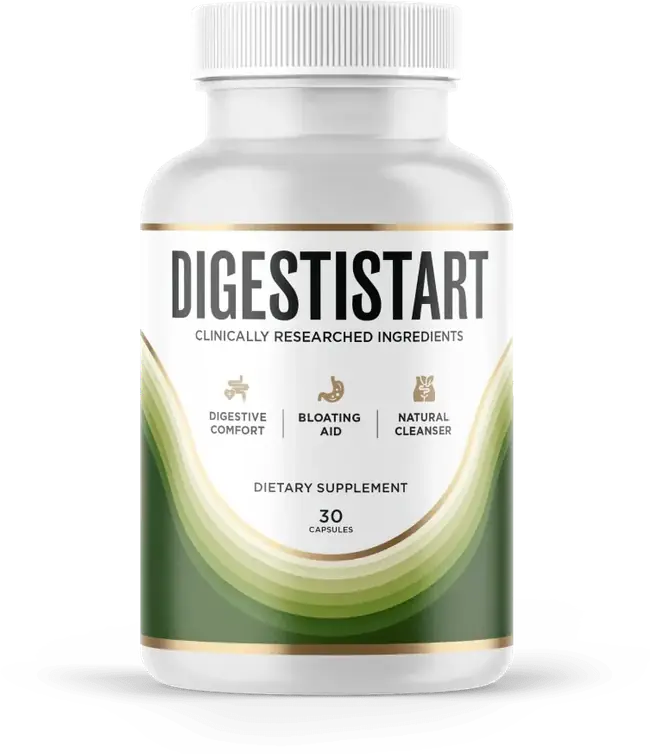
DigestiStart Dietary Supplement (30 Capsules)
Product image is displayed for identification. Seller claims and clinical evidence are evaluated separately throughout this site.
View Current Seller OfferOur rule: the strength of a conclusion should not exceed the strength of the evidence supporting it.
Ingredients Disclosed on the Official Supplement Facts Label
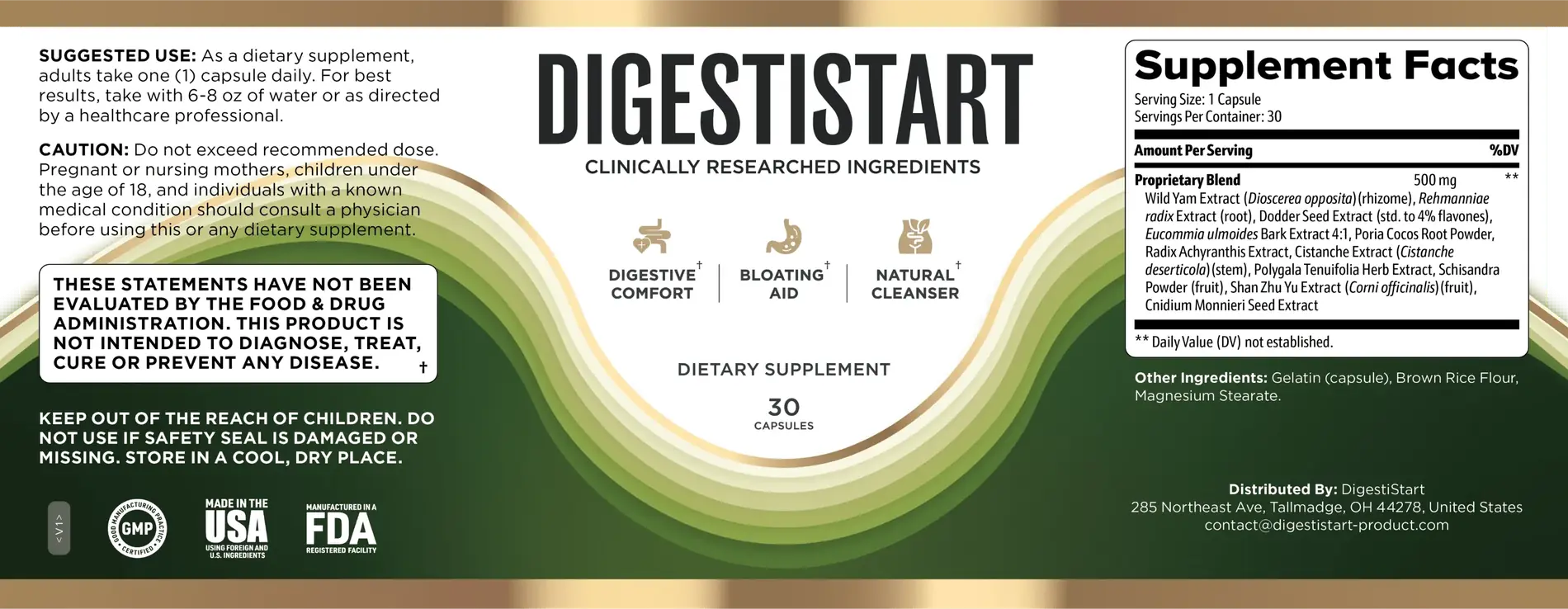
According to the manufacturer’s Supplement Facts panel (Serving Size: 1 Capsule; Servings Per Container: 30), every capsule of DigestiStart contains a 500 mg Proprietary Blend composed of 11 traditional plant extracts and powders, listed in the following label order:
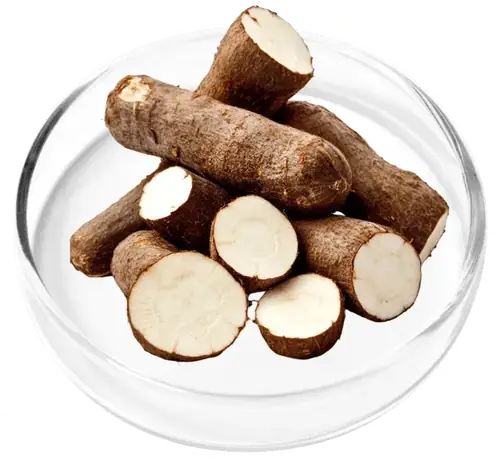
- Wild Yam Extract (Dioscorea opposita) (root)
- Rehmanniae Radix Extract (Rehmannia glutinosa) (root)
- Dodder Seed Extract (Cuscuta chinensis, standardized to 4% flavones)
- Eucommia Ulmoides Bark Extract (4:1 extract)
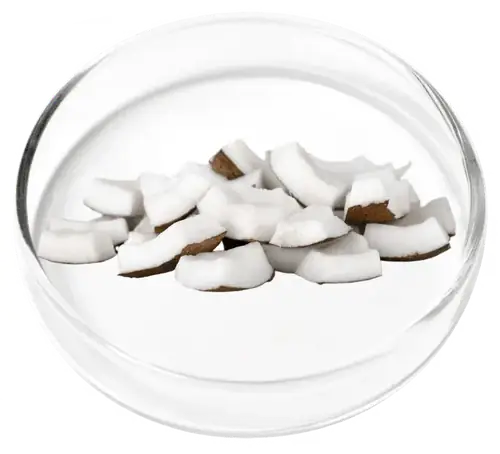
- Poria Cocos Root Powder
- Radix Achyranthis Extract (Achyranthes bidentata)
- Cistanche Extract (Cistanche deserticola) (stem)
- Polygala Tenuifolia Herb Extract
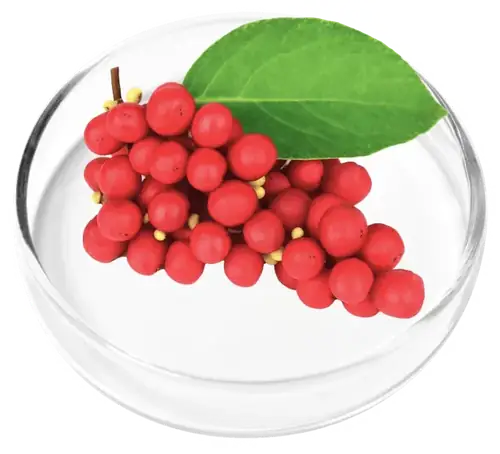
- Schisandra Powder (Schisandra chinensis) (fruit)
- Shan Zhu Yu Extract (Cornus officinalis) (fruit)
- Cnidium Monnieri Seed Extract
Other Ingredients: Gelatin (capsule), Brown Rice Flour, and Magnesium Stearate.
Official DigestiStart Supplement Facts Panel
Verified manufacturer label showing the 500 mg Proprietary Blend, extract ratios (Dodder Seed std. to 4% flavones; Eucommia ulmoides 4:1), and other capsule ingredients.
Summary of the 11 Botanicals & Evidence Context
| Ingredient (Label Form) | Primary Research Context | Evidence Transfer Limitation |
|---|---|---|
| Wild Yam Extract (Dioscorea opposita root) | Studied in lab and animal research for feeding helpful gut bacteria and supporting smooth digestion. | Most gut bacteria data come from lab or animal tests using higher standalone doses. |
| Rehmanniae Radix Extract (root) | Traditional root studied for soothing the digestive lining and calming irritation. | Limited standalone human studies for everyday adult constipation. |
| Dodder Seed Extract (std. to 4% flavones) | Cuscuta chinensis plant compounds have antioxidant and liver-support research in lab studies. | One of only two herbs on the label with a stated extract strength (4% flavones), but the exact milligram weight is not listed. |
| Eucommia Ulmoides Bark Extract (4:1) | Animal studies suggest bark extract may help balance gut bacteria and calm gut irritation. | Mouse gut findings do not automatically prove bloating or regularity relief in people at small doses. |
| Poria Cocos Root Powder | Natural compounds in Poria cocos have been studied for strengthening the gut lining and supporting healthy gut bacteria. | Raw root powder in a shared 500 mg blend delivers a small fraction of the multi-gram amounts used in traditional teas. |
| Radix Achyranthis Extract | Used in traditional herbal blends for circulation and gentle muscle support. | Lacks direct human studies testing it alone for bloating or slow bowel movements. |
| Cistanche Extract (Cistanche deserticola stem) | Widely researched in traditional East Asian herbalism for adding moisture to the stool and helping bowel movements. | Human and animal studies typically use much larger extract amounts than a small share of a 500 mg capsule. |
| Polygala Tenuifolia Herb Extract | Studied mainly for calming stress and supporting the connection between the brain and the gut. | Indirect role; not a proven primary remedy for constipation or acid reflux. |
| Schisandra Powder (fruit) | Tested in a 2015 randomized human clinical study (PMID 26026146) for supporting healthy gut bacteria in adult women. | The human trial used a dedicated daily dose of Schisandra rather than a tiny share of an 11-herb blend. |
| Shan Zhu Yu Extract (Cornus officinalis fruit) | Rich in natural fruit acids and antioxidants; studied for soothing tissues and supporting digestion. | Mostly early lab and animal research; human digestive trials remain limited. |
| Cnidium Monnieri Seed Extract | Studied in lab models for relaxing smooth muscle and calming irritation. | Listed last in the blend, meaning it likely makes up one of the smallest milligram amounts in the capsule. |
Why an Ingredient List Is Not an Evidence Score
A supplement can include 11 well-known herbs without the finished combination ever being tested in a human study. Which part of the plant is used, how concentrated the extract is, and how many milligrams you get per capsule all matter. Showing that a high dose of an herb helped in a lab test does not prove that a single 500 mg mixed capsule will work the same way.
Wild Yam (Dioscorea opposita)
Wild Yam appears first on the DigestiStart Supplement Facts panel, meaning it has the largest weight among the 11 herbs in the blend. A 2023 study in Nutrients looked at how Chinese yam helps feed beneficial gut bacteria during digestion. While this gives a reasonable explanation for how it may support stomach comfort, lab tests are early evidence and are not the same as a human trial for chronic constipation.
Read the Wild Yam (Dioscorea opposita) research review →
Cistanche (Cistanche deserticola) and Bowel Regularity
Among the 11 ingredients in DigestiStart, Cistanche deserticola has some of the clearest traditional and scientific links to bowel regularity. In traditional herbal practice, Cistanche stem is used to help retain stool moisture and encourage gentle bowel movement in people with dry, sluggish stools. A 2022 study in Foods showed that Cistanche extracts helped balance gut bacteria and bowel activity in animal testing. However, because Cistanche is seventh on the label’s ingredient list, the actual amount inside each 500 mg capsule is modest.
Schisandra Fruit and Human Gut Bacteria Research
Schisandra chinensis is one of the few DigestiStart ingredients tested in a controlled human study looking at gut bacteria. In a 2015 study published in Nutrition Research (PMID 26026146), researchers found that Schisandra fruit helped shift gut bacteria in a healthy direction. Even so, DigestiStart uses whole Schisandra fruit powder near the bottom of a 500 mg blend rather than the full standalone dose used in that study.
Poria Cocos, Eucommia Ulmoides and Gut Lining Support
Poria cocos root powder and Eucommia ulmoides bark extract (concentrated 4:1) are often paired in traditional formulas. Studies in the Journal of Agricultural and Food Chemistry (2019) and Food Science and Human Wellness (2024) report that natural compounds in Poria cocos help protect the gut lining and support friendly gut bacteria in lab models. Likewise, a 2022 study in Frontiers in Microbiology found that Eucommia bark extract calmed gut irritation in mice. These studies point to gentle gut-lining support rather than heavy-metal removal.
Rehmannia, Dodder Seed, Cornus Officinalis and Traditional Herbal Pairing
Looking at all 11 herbs together shows an interesting fact: the DigestiStart formula closely follows classic East Asian herbal combinations (which pair Rehmannia, Cornus officinalis [Shan Zhu Yu], Dioscorea [Wild Yam], and Poria cocos with Cuscuta [Dodder Seed], Eucommia, Achyranthes, and Cistanche).
While the seller’s sales page claims these 11 herbs were chosen to “flush out lead coating your gut muscles,” the actual ingredient list is a traditional herbal blend for gentle digestion and gut comfort—not a medical treatment for removing lead.
Formula Transparency & The 500 mg Blend Math
The manufacturer deserves credit for printing the full Supplement Facts panel, naming the plant parts, listing two extract ratios (Dodder Seed at 4% flavones and Eucommia ulmoides at 4:1), and clearly showing the inactive capsule ingredients. However, combining all 11 herbs into a single 500 mg proprietary blend creates two important limits for shoppers:
- Small Doses Per Herb: Splitting 500 mg across 11 ingredients gives an average of about 45.4 mg per herb. Even if the first three herbs make up 60% of the capsule, the remaining eight herbs would only be present in tiny 15 mg to 35 mg amounts.
- Capsule Shell Check (Gelatin): The label clearly lists Gelatin (capsule). Shoppers who want strictly vegetarian, vegan, kosher or halal products should note that the capsule shell is made from animal gelatin, even though some promotional blogs call DigestiStart “100% plant-based.”
Our Conclusion on DigestiStart Ingredients
DigestiStart combines 11 real, traditional herbs that have reasonable support for feeding good gut bacteria, soothing the stomach lining and encouraging gentle regularity. However, the product should be viewed as a modest-dose (500 mg) herbal supplement rather than a proven cure for lead-related “gut paralysis.” When exact milligram amounts for each herb are hidden inside a proprietary blend, expectations should stay realistic.
Why ingredient evidence is not product evidence →
Sources & References
We prioritize primary product label information, regulatory guidance and peer-reviewed scientific literature. Seller marketing claims are not treated as independent clinical evidence.
- DigestiStart official Supplement Facts label & published ingredient reference list
- Song M, et al. Schisandra chinensis fruit modulates the gut microbiota composition in association with metabolic markers in obese women: a randomized, double-blind placebo-controlled study (Nutrition Research, 2015; PMID 26026146)
- Cui Y, et al. Chinese yam and its active components regulate the structure of gut microbiota and indole-like metabolites in anaerobic fermentation in vitro (Nutrients, 2023; 15(24):5112)
- Li Y, et al. Effects of two kinds of extracts of Cistanche deserticola on intestinal microbiota and its metabolism (Foods, 2022; 11(18):2897)
- Xu H, et al. 16α-Hydroxytrametenolic acid from Poria cocos improves intestinal barrier function through the glucocorticoid receptor-mediated PI3K/Akt/NF-κB pathway (J Agric Food Chem, 2019; 67(39):10871–10879)
- Yan D, et al. Eucommia ulmoides bark extract reduces inflammation by regulating the gut microbiota and enriching the Parabacteroides strain (Frontiers in Microbiology, 2022; 13:967649)
- U.S. FDA Botanical Drug Development Guidance for Industry
Related Research
Editorial owner: DigestiStart Reviews Editorial Team · Last reviewed: November 10, 2026